· by Hanna Carolina · 5 min read
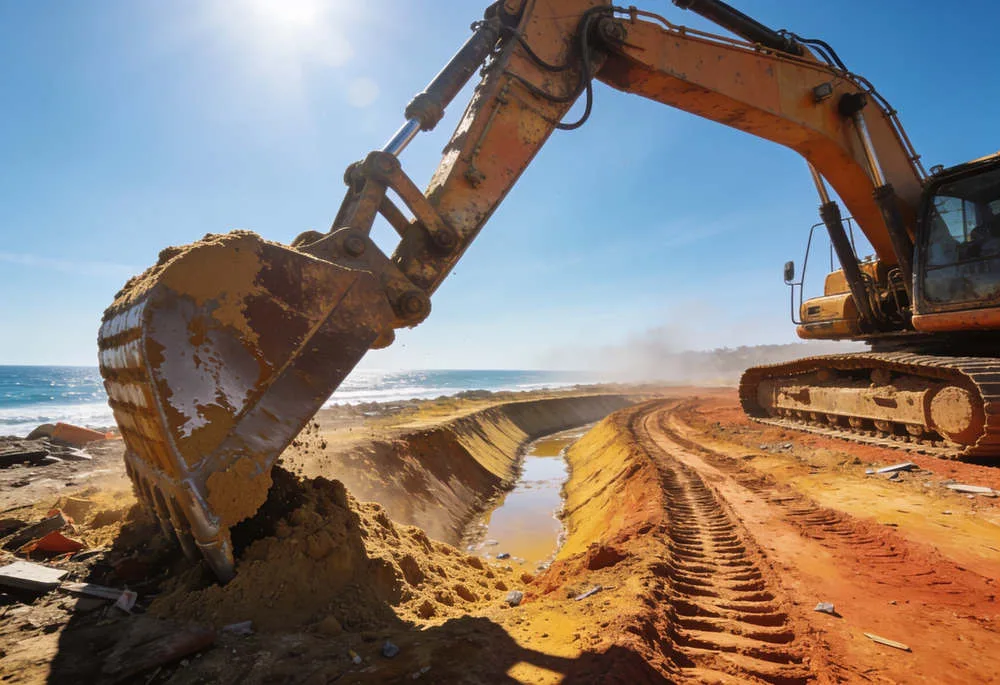
Developers planning projects in Palm Coast and the surrounding Flagler County area face a site prep sequence that is more demanding than most inland Florida markets. Coastal lots frequently carry organic soil layers, shallow water tables, and stormwater management obligations that require careful earthwork before any foundation goes in. Skip or shortcut that sequence and the consequences show up later in settlement cracks, drainage failures, and remediation costs that dwarf the original site prep budget. Rogers Landworks has worked through that sequence on development sites across the region and knows where the problems hide. Contact Rogers Landworks for a site consultation or call (386) 334-4579 before your 2026 project timeline locks in.
Land clearing: what actually has to come out
Clearing a development parcel in the Palm Coast area is not just removing trees. The canopy comes down first, but the work that matters most happens at ground level: stumps, root mass, and surface organic material all have to come out completely before any grading begins. Leaving organic debris buried under fill is one of the most reliable ways to create a soft spot under a slab or road base that no one notices until the structure is already on top of it. On wooded lots near the Matanzas Woods area, where slash pine and palmetto root systems run shallow and wide, that clearing work requires the right equipment and a crew that knows how deep to go. Land clearing done right sets the condition for everything that follows. Done fast and cheap, it creates problems that are expensive to diagnose and harder to fix.
Flagler Beach parcels present a different challenge. Lots closer to the coast often carry scrub oak and cabbage palm with dense understory, and the soil profile underneath can shift significantly within a few hundred feet. What looks uniform from the road may have pockets of muck or organic fill that the previous owner never disclosed. A thorough clearing operation exposes those conditions before they are buried under engineered fill, which is exactly when you want to find them.
Demucking and soil stabilization: the step most developers underestimate
Organic soils, commonly called muck, do not support load. They compress under weight, they hold water, and they decompose over time. A foundation built over unremoved muck will settle unevenly regardless of how well the slab is engineered. In Bunnell and the lower-lying portions of Palm Coast near the Intracoastal, organic soil layers can run several feet deep. The only reliable fix is removal: excavate to stable mineral soil, haul off the muck, and bring in suitable fill compacted in lifts to the density your geotechnical report specifies.
Soil stabilization with lime or cement-modified subgrade is sometimes used in combination with demucking where marginal soils sit below the excavation depth. Either way, this work needs to happen before grading, not after. A developer who grades first and discovers muck during utility trenching is looking at a rework sequence that costs significantly more than addressing it at the clearing stage.
Grading and drainage: managing Florida stormwater from the start
Florida's rainfall intensity is not forgiving of poor site drainage. A Palm Coast development site that does not move stormwater away from structures and toward appropriate collection points will flood, and in Flagler County's regulatory environment, that is also a permitting problem. Projects disturbing one acre or more trigger NPDES stormwater permit obligations and require a Stormwater Pollution Prevention Plan (SWPPP) to be in place before earth is moved. Erosion control measures, silt fencing, inlet protection, and stabilized construction entrances are not optional add-ons; they are conditions of the permit.
Good grading and drainage work integrates those requirements from the first pass. That means establishing positive drainage slopes early, building retention and detention features to the civil engineer's design, and maintaining erosion controls throughout the earthwork phase. A crew that understands both the geotechnical and regulatory side of Florida site prep can keep a project moving without generating agency notices that pause the schedule.
Why the earthwork sequence matters for your 2026 schedule
The clearing, demucking, and grading phases cannot be compressed without risk, but they can be planned efficiently when the crew knows the site conditions going in. That means a site visit before mobilization, a clear understanding of the soil conditions from any available geotechnical data, and a realistic schedule that accounts for weather, permit timelines, and material haul distances.
Developers who line up their earthwork contractor early, before the design is fully permitted, tend to move faster once approvals come through. The contractor already knows the site, has flagged any conditions worth discussing with the civil engineer, and can mobilize without a learning curve. If your Palm Coast or Flagler County project is targeting a 2026 groundbreaking, now is the right time to have that conversation. Call Rogers Landworks at (386) 334-4579 or request a site consultation with Rogers Landworks to talk through what the earthwork scope looks like before you finalize your budget.