· by Hanna Carolina · 5 min read
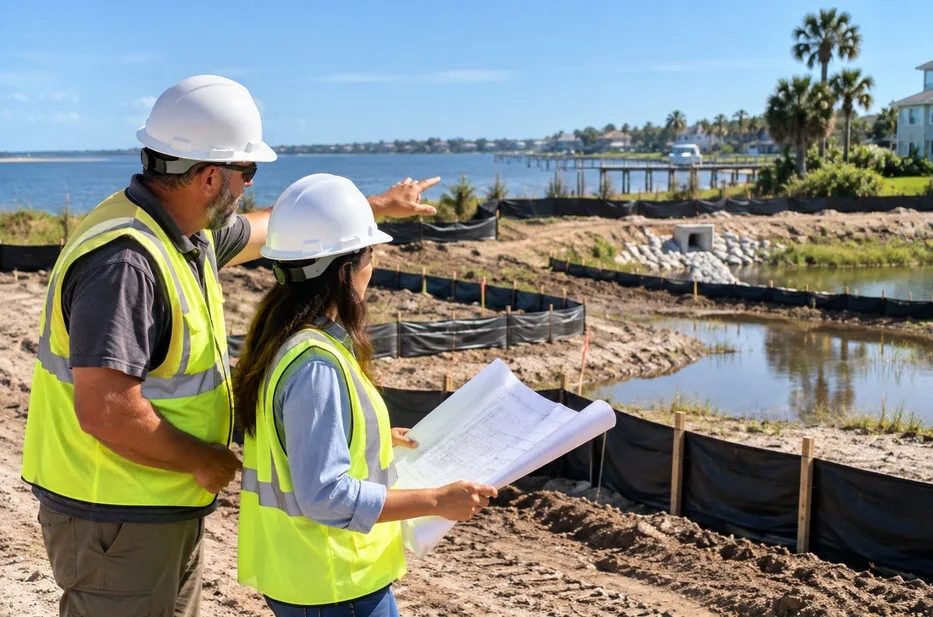
Before a single tree comes down on an Ormond Beach site development project, the erosion and sediment controls need to be in the ground. That means perimeter silt fence, inlet protection, a stabilized construction entrance, and a stormwater plan that matches your permits. Get that order wrong and the first summer storm can turn a clean schedule into a stop-work order.
At Rogers Landworks, we plan controls on day one, not after the inspector shows up. If you are pricing a project and want the erosion and stormwater side handled correctly from the start, talk with our team at (386) 334-4579 before the first machine is mobilized.
What erosion controls does a site development project need before clearing?
At a minimum, most sites need perimeter silt fence, protection on any storm inlets that can receive runoff, and a stabilized construction entrance. Those three go in first, and they stay maintained until the site is permanently stabilized.
Silt fence only works if it is trenched in and backfilled, with the fabric toed into the soil on the uphill side. Fence that is simply stapled to stakes and laid on top of the sand blows out the first time water hits it. Inlet protection matters even more here. Runoff from a lot near Granada Boulevard does not stay local. It moves through the storm system and ends up in the Halifax River, and inspectors treat sediment in a public inlet as a direct discharge, not a housekeeping issue. Filter bags, inlet sediment traps, or curb inlet barriers should be sized to the inlet type actually on site.
The construction entrance is the control people underestimate. A pad of coarse rock at the gate knocks mud off tires before trucks reach the road. Without it, tracking onto city streets is one of the fastest ways to get a complaint. When our crews handle land clearing, the controls are installed and checked before the first tree is cut.
What is the difference between temporary and permanent stormwater measures?
Temporary measures hold sediment on site while the ground is disturbed. Permanent measures manage stormwater for the life of the finished project, usually through retention or detention ponds, swales, and the pipe network shown on your approved plans.
Temporary controls include sediment basins, check dams in swales, rock outlet protection, and stabilization like seed, sod, or mulch on finished slopes. They are meant to come out once grass is established. Permanent systems are designed by your engineer and permitted through the St. Johns River Water Management District, which reviews stormwater for projects in Volusia County. Those ponds have to be built to the elevations on the plans, not to what looks right in the field.
Water table is the local wrinkle. On low sites closer to the Tomoka River and the coastal side of town, groundwater can sit close to the surface during the wet season, which affects how deep a pond can be dug and how fast it recovers. A contractor who knows that will flag it during preconstruction, not after the excavator hits water. Our grading and drainage work is built around hitting those design grades so final inspections go smoothly.
How should erosion controls be sequenced with clearing and grading?
Perimeter controls go in first, clearing and grading happen in phases, and every disturbed area gets stabilized as soon as it reaches final grade. Disturbing the whole site at once and stabilizing it all at the end is the sequence that fails inspections.
A typical sequence looks like this. Install silt fence, inlet protection, and the construction entrance. Clear only the phase you are ready to grade. Rough grade and build the stormwater pond early, so it can act as a temporary sediment basin during construction. Then work across the site in sections, stabilizing slopes and finished pads as you go. Before turnover, clean the accumulated sediment out of the pond and restore it to design grade.
Timing matters in Volusia County. Summer afternoon storms can dump heavy rain in a short window, and hurricane season runs from June through November. On a commercial lot along US-1, an exposed pad sitting open for three weeks in July is a real risk. Phasing the work keeps less bare ground open at any one time.
How do you avoid stop-work orders and fines on an Ormond Beach site?
Follow the permit, inspect on schedule, and fix failures the same day you find them. Most enforcement problems come from controls that were installed once and then ignored.
Projects that disturb one acre or more, or that are part of a larger common plan of development, generally need coverage under Florida's Construction Generic Permit. That means a Stormwater Pollution Prevention Plan kept on site, a Notice of Intent filed with the Florida Department of Environmental Protection at least 48 hours before disturbance, and inspections at least every seven days and within 24 hours of a rain event of half an inch or more. Inspection records need to be kept with the plan.
Problems also show up from outside the fence. We had one developer find out about an erosion problem only after a neighbor texted a photo of a mudslide crossing the property line after a storm. That is the kind of discovery nobody wants to make secondhand, and it is exactly what regular inspections and a contractor who plans controls from the start are meant to catch first.
Starting a project in Ormond Beach and want erosion and stormwater handled right from the first day? Call Rogers Landworks at (386) 334-4579, or request a site development estimate, and we will plan your controls before any dirt moves.